Understanding Roof Ventilation: Why It Matters for Your Home
Proper roof ventilation is more than just a technical detail—it’s key to keeping your home comfortable, energy-efficient, and long-lasting. Without adequate airflow, your attic can trap heat and moisture, leading to higher energy bills, faster roof wear, and even potential mold problems. In this guide, we’ll break down the benefits, types, and best practices for roof ventilation, so you can protect your home and stay comfortable year-round.
Think back to the last time you were stuck in a crowded room with no windows and the AC turned off. You feel sluggish, the air gets heavy, and honestly, you just want to get out. Your home feels the same way.
At Royal Premier Roofing & Construction LLC, we’ve climbed thousands of ladders, and if there’s one thing we’ve learned, it’s this: a roof is more than just a shield against the rain. It’s a living, breathing part of your family’s sanctuary. But when roof ventilation is ignored, that sanctuary starts to feel a lot more like a pressure cooker.
Roof Ventilation: How the “Attic Oven” Affects Your Comfort
We’ve all had those summer nights where the kids can’t sleep because the upstairs bedrooms feel ten degrees warmer than the rest of the house. You check the thermostat, you close the blinds, but nothing works.
The culprit? It’s usually your attic holding onto a day’s worth of Texas (or local area) heat. Without proper attic air circulation, that heat has nowhere to go but down—right into your pillows and your pockets. When your AC is fighting a 150-degree attic, your energy bills skyrocket.
Installing things like ridge vents or a roof exhaust fan isn’t just about “house maintenance.” It’s about being able to sleep through the night without tossing and turning in a sweat.
The Hidden Guest: Why Moisture Matters Roof Ventilation
We don’t often think about where the steam goes when we take a hot shower or boil a pot of tea. It rises. And if your attic isn’t breathing, that moisture gets trapped against the cold wood of your roof deck.
This is where the “scary stuff” happens. Roof mold isn’t just a dirty word; it’s a silent intruder that can affect your family’s allergies and the structural integrity of your home.
By ensuring the importance of ventilation is a priority, you’re basically keeping a giant dehumidifier running for free. You’re protecting the wood, the insulation, and most importantly, the people living under it.
Roof Ventilation: Spotting the Signs Without Being an Expert
You don’t need a tool belt to know if your roof is struggling. Your house will tell you if you know what to listen for:
- The “Sunburn” for Shingles: Have you noticed your shingles looking “crispy” or curling at the edges? That’s not just age; that’s the roof being cooked from the inside out.
- The Winter Warning: If you see beautiful, thick icicles hanging off your roof, they might look pretty, but they’re actually a cry for help. It means your attic vents aren’t doing their job, causing snow to melt and refreeze in a way that can tear your gutters apart.
- The Musty Whiff: If you open your attic hatch and it smells like a damp basement, you’ve got a circulation problem.
Here are some brief, human-centered FAQs to round out your blog. They address common homeowner anxieties with a mix of expert advice and “plain English.”
FAQs – Roof Ventilation
I already have a roof fan; do I really need ridge vents too?
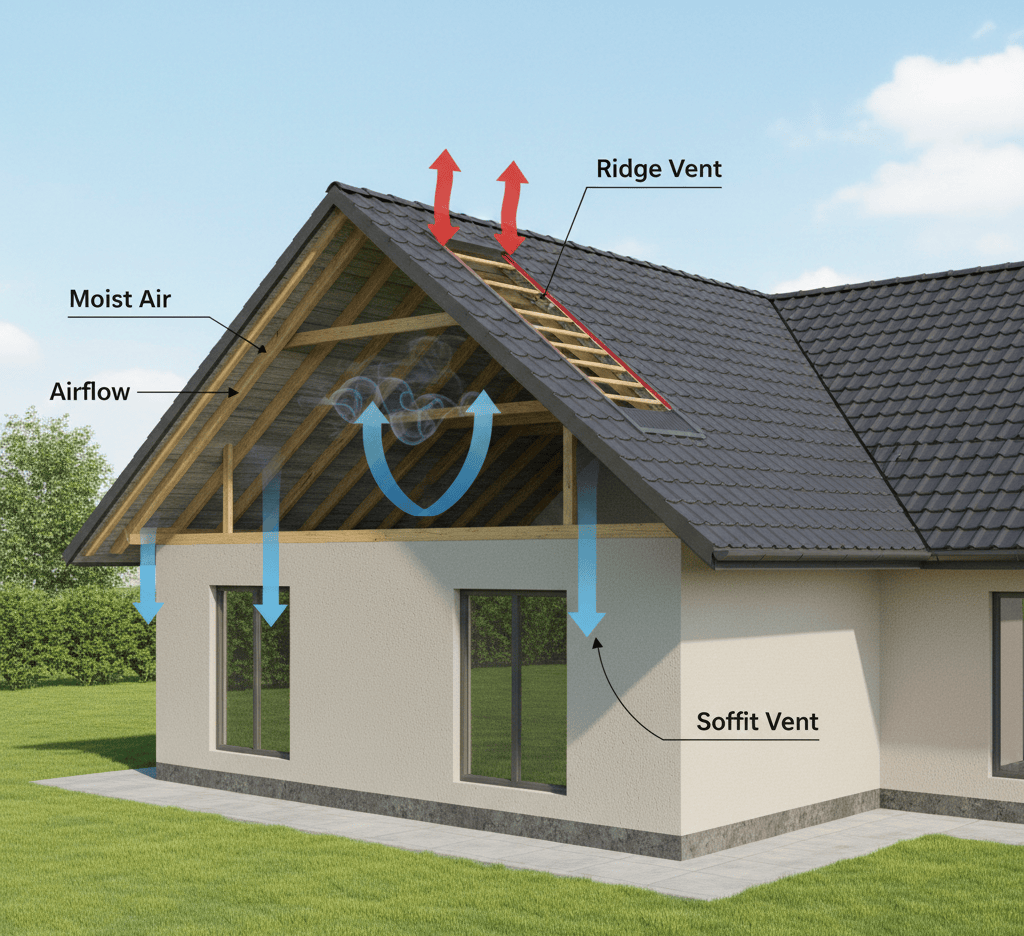
Actually, more isn’t always better! It’s about balance. Think of it like a straw—if you’re trying to suck air out the top but the bottom is plugged (or you have too many “holes” in the middle), the system fails.
Usually, a mix of soffit vents (intake) and ridge vents (exhaust) creates a natural, perfect breeze without needing a noisy motor.
Can proper ventilation really lower my monthly bills?
Absolutely. On a 100°F day, your attic can act like a giant radiator sitting right above your living room.
If that heat can’t escape through attic vents, your AC will run non-stop just to keep up. Proper attic air circulation can shave a noticeable percentage off your cooling costs.
How do I know if I have roof mold?
You don’t always have to see it to know it’s there. If your attic feels “heavy” or smells a bit like a damp locker room, that’s your first warning sign.
If you see dark streaks on your rafters or insulation that look matted and wet, it’s time to call in the pros at Royal Premier Roofing & Construction LLC to get the air moving again.
Roof Ventilation: Are “Ice Dams” Really That Big of a Deal?
They look like pretty winter decorations, but they’re actually a roof’s nightmare. They happen when heat escapes your attic, melts the snow, and then that water freezes at the edge of your roof.
This creates a “dam” that forces water under your shingles and into your drywall. A cold, well-ventilated roof is the only way to stop them.
Is a ventilation check expensive?
It’s much cheaper than a new roof! Most of the time, a ventilation “tune-up”—like clearing out blocked soffit vents or adding a few ridge vents—is a minor investment that adds years to your roof’s life.
Why Roof Ventilation Matters at Royal Premier
At the end of the day, we’re homeowners too. We know that a roof isn’t just an expense; it’s the lid on the box that holds everything you love.
When we talk to you about attic vents or ridge vents, we aren’t trying to sell you parts and pieces. We’re trying to make sure that ten years from now, your roof is still as strong as the day it was put on.
You shouldn’t have to worry about what’s happening over your head. You should be able to trust that your home is working for you, keeping you cool in the summer, dry in the winter, and safe all year round.